


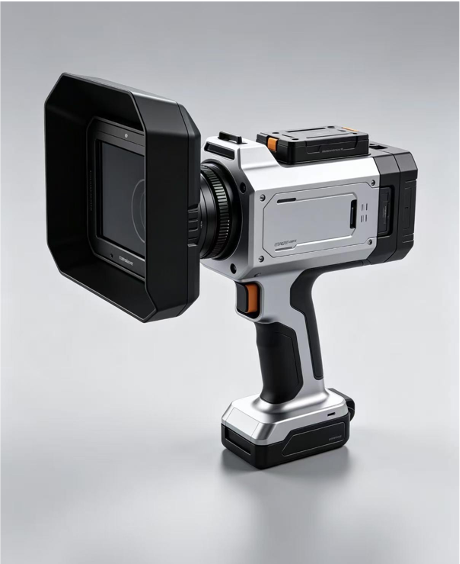
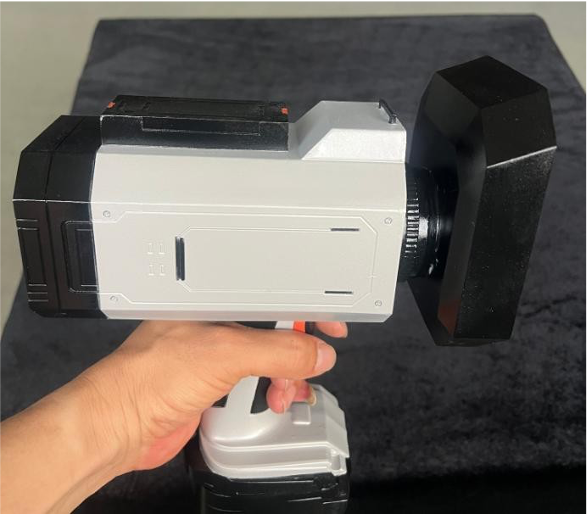
Handheld Welding Inspection Equipment
Welding Vision
All-Scenario Solution
Industry Pain Point: Traditional Testing Methods Urgently Need Revolutionization
The traditional detection mode of "manual + radiation" can no longer meet the strict requirements of modern industry for high precision, high efficiency, digitalization and whole-process traceability. There is an urgent need for technological innovation in the field of industrial weld inspection.
70% Shipbuilding Industry · Structural Failure
Over 70% of structural failure incidents are directly caused by welding defects, posing significant safety hazards.
G2% Oil Industry · Pipeline Leakage
In 62% of oil and gas pipeline leakage incidents, the root cause can be traced to weld defects, resulting in substantial losses.
Primary causative factor
Power Industry · Collapse of Wind Turbine
The weld defect was identified as the primary direct cause of the collapse of the large wind turbine tower.
Low Efficiency · Low Efficiency
A single weld seam takes 15 minutes to 4 hours to complete, with slow inspection speeds that fail to meet the demands of modern industrial mass production and rapid inspection requirements.
Highly Subjective
The process is highly dependent on human experi-ence, with non-uniform evaluation criteria, result-ing in persistently high rates of missed and false positives, reaching up to 15%-30%.
Environmental Limits · Environment Limits
In harsh working conditions such as confined spaces, high-altitude operations, and oily or damp environments, manual inspection not only poses significant operational challenges but also carries substantial safety risks.
No Traceability
The absence of digital recording methods, along with no image preservation or data archiving, makes it difficult to establish a comprehensive quality control loop and fails to meet increasingly stringent regulatory requirements.
Market Prospects: Industry-Driven – The Ultimate Pursuit of Precision in High-End Equipment
High-End Shipbuilding
High-end vessels such as LNG carr-iers and container ships demand stringent weld seam precision, with tolerances limited to within 0.1 mm—a requirement that traditional manual inspection methods can no longer meet.
Large-Scale Wind Po-wer Equipment
Offshore wind turbine towers exceed 100 meters in height and are valued at tens of millions; even the slightest welding defect could lead to catast-rophic consequences, necessitating exceptionally stringent standards for weld quality.
Long-Distance Oil and Gas Pipelines
High-grade, large-diameter oil and gas transmission pipelines impose extremely stringent requirements on weld strength and toughness, necessitating high-precision inspe-ction to ensure long-term safe op-eration.
Core Trend: Traditional inspection technologies have reached their peak, with intelligent 3D visual inspection emerging as the sole solution for high-end equipment manufacturi-ng.