


Cadmium
Cadmium 6N (99.9999%) – high-purity Cd metal for optoelectronics and industry
High-purity cadmium grade 6N is metallic cadmium with a concentration of the main element ≥ 99.9999% (i.e., a six-digit purity grade on the N scale, impurity < 1 ppm). This purity is achieved through multiple vacuum distillation, zone purification, and additional refining processes.
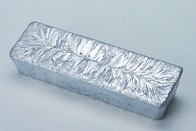
Cadmium 6N is used in applications requiring minimal influence of impurities on the physical and chemical properties of materials, for example, in the production of semiconductors, infrared detectors, solar cells and scientific reagents.
Physical and chemical properties of high purity cadmium
- Chemical symbol: Cd
- CAS No.: 7440-43-9
- Atomic weight: 112.41
- Density: ≈ 8.56 – 8.65 g/cm³ (at 20 °C)
- Melting point: ≈ 321 °C
- Boiling point: ≈ 765 – 767 °C
- Crystal lattice shape: hexagonal close-packed (hcp)
Cadmium is a silvery-white metal with soft, ductile properties. It is resistant to atmospheric corrosion, slowly oxidizes in air, and is insoluble in water, but reacts with acids.
How is cadmium grade 6N produced?
High-purity cadmium is obtained from lower-purity parent metal by vacuum distillation, where differences in partial pressures allow impurities to be separated, followed by de-oxidation (oxygen removal) and further refining in an inert atmosphere.
After initial purification, the metal is remelted and cast into ingots, rods, or other shapes. Purity control is achieved by spectrometric analysis (GDMS/ICP-MS) at the parts per million (ppm) level.
Key applications of cadmium 6N
High-purity cadmium 6N is in demand in technical and scientific fields where impurities can significantly alter the properties of the final product:
Semiconductor and optoelectronic industry
Cd is a constituent of II-VI semiconductors such as:
- CdTe (cadmium telluride) - for photocells and solar batteries;
- CdZnTe (cadmium zinc telluride) - for high-performance radiation detectors;
- CdSe (cadmium selenide) - for optical sensors and vision devices.
Infrared and gamma detectors
High-purity CdTe and CdZnTe are used in infrared technology and X-ray/gamma detectors due to their stable response and low background noise.
Scientific research and calibration
Metallic cadmium 6N is used in laboratories to calibrate equipment for impurity analysis, create reference materials, and test the sensitivity of analytical instruments.
Nuclear power and specialized materials
Due to its ability to effectively capture thermal neutrons, cadmium is widely used in the manufacture of control elements in some types of nuclear reactors.
Delivery forms and packaging
We supply cadmium 6N in various forms depending on customer specifications:
- Ingots and bars;
- Rods and bars;
- Pieces and blanks for rolling or further processing.
All products are packaged in sealed protective packaging (inert atmosphere / plastic bag) to prevent surface contamination and ensure cleanliness during storage and transportation.