


Antimon
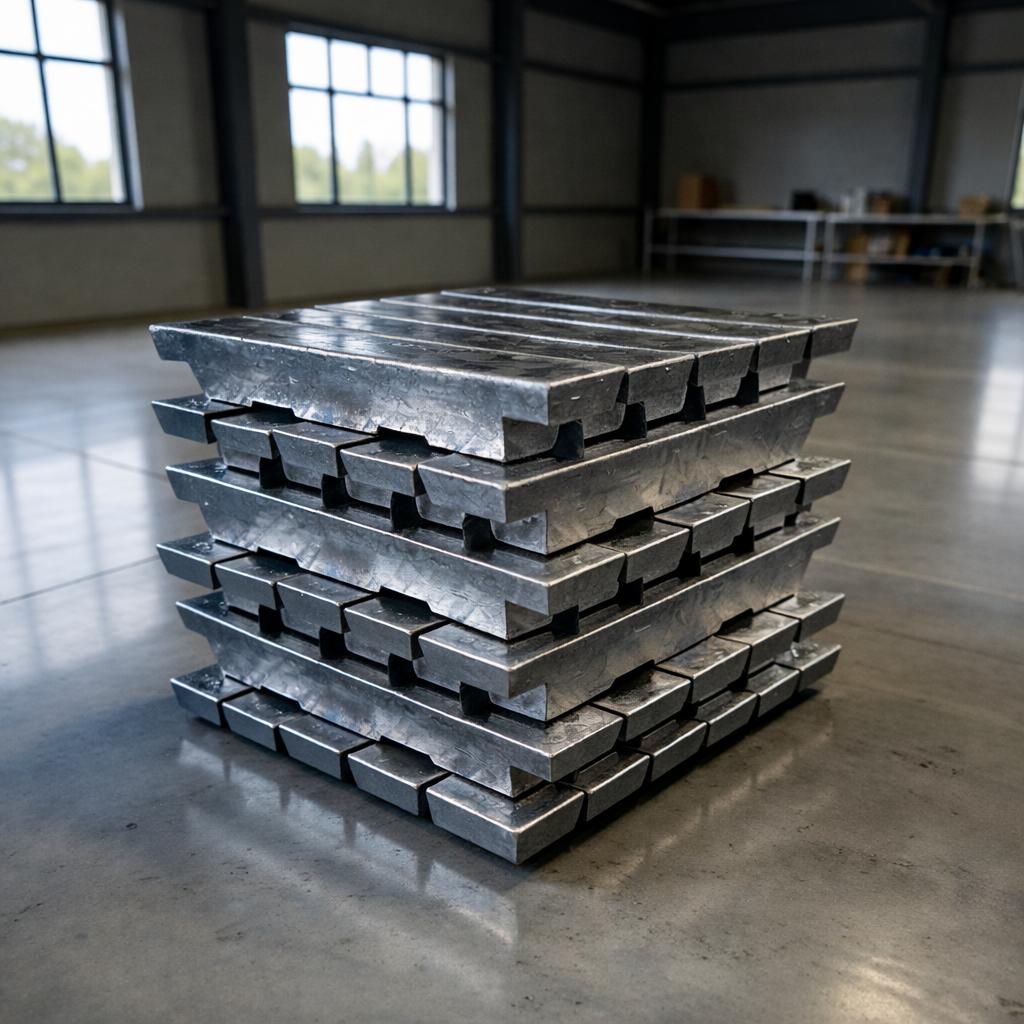
Antimony Su0, Su1, Su2 GOST 1089-82 in ingots
Characteristics
Form of supplied raw materials: pigs
Material: Antimony
Description
Antimony ingots (Su0, Su1, Su2, GOST 1089-82) are a sought-after metal widely used in the production of printing alloys. Metal products weighing 15 to 25 kg are manufactured according to GOST 1089-82 regulations. Different grades of antimony are used to produce this type of metal product .
Scope of application
Metallic antimony exhibits the properties of both a metal product and a metalloid. It is primarily purchased by industrial enterprises:
- Mechanical engineering.
- Construction.
- Metallurgical.
How are alloy grades obtained?
Antimony alloys come in different forms, and their production methods vary accordingly. For example, the Su-2 alloy is produced using a process called refining in industrial remelting furnaces of crude metal obtained by electrically smelting antimony concentrates. This material is used to produce lead antimony, low-slip alloys, and alloys for wire sheathing and batteries for various applications.
Antimony grades SU-0 and SU-00 are produced by flame refining of cathodic antimony. These grades are used to produce battery and topographic alloys, tin and lead additives, enamel coatings, and ceramic paints. If the metal has higher purity, it is produced using an electrolyte in special alkaline solutions, followed by rinsing, remelting, and zone refining of the cathode metal. Grades with the abbreviation "0" are used in semiconductor manufacturing and as special additives.
Properties and advantages of metal
The advantages of antimony of all grades include:
- Durability.
- Resistance to rusting processes.
- High density (specified in the technical specifications list ).
- Fragility.
- The ability to make metal alloys harder.
It is also worth adding that such a metal product can be used as a secondary raw material – it can be remelted.
Antimony metal in ingots
GOST 1089-82
Brand: Su0, Su1, Su2
Release form: pig, ingot
Weight: 15-25 kg.
Application: Antimony is used as an alloying additive, a base for low-melting alloys and solders, and in the defense industry. It is also a component of lead alloys and is a component of babbitt antifriction alloys. Antimony imparts strength to alloys and improves the metal's flow properties, making it widely used to create micro-castings, micro-stampings, and other parts with fine relief. Recently, antimony has increasingly been used in the semiconductor industry for the production of diodes, infrared detectors, and Hall effect devices.
The scope of application includes:
- rechargeable batteries
- antifriction alloys
- printing alloys
- small arms and tracer bullets
- cable sheaths
- matches
- medicines, antiprotozoal agents
- soldering - some lead-free solders contain antimony
- use in linotype printing machines
Chemical composition of antimony according to GOST 1089-82
| Brand | Chemical composition, % | Scope of application | ||||
| Sb, not less than | Impurities, no more than | |||||
| Pb | As | Fe | Sn | |||
| Su0 | 99.6 | 0.2 | 0.02 | 0.02 | 0.02 |
Production of battery and printing alloys, tin-lead based solders and cable sheath alloys, enamels and ceramic dyes. |
| Su1 | 99.4 | 0.1 | 0.1 | 0.1 | 0.08 | |
| Su2 | 98.8 | 0.6 | 0.2 | 0.1 | 0.1 |
Production of antimony lead, antifriction alloys, alloys for cable sheathing and general-purpose batteries. |